Iron Ore
Iron-bearing raw material for iron and steel production.
DISCUSS YOUR REQUIREMENT ↗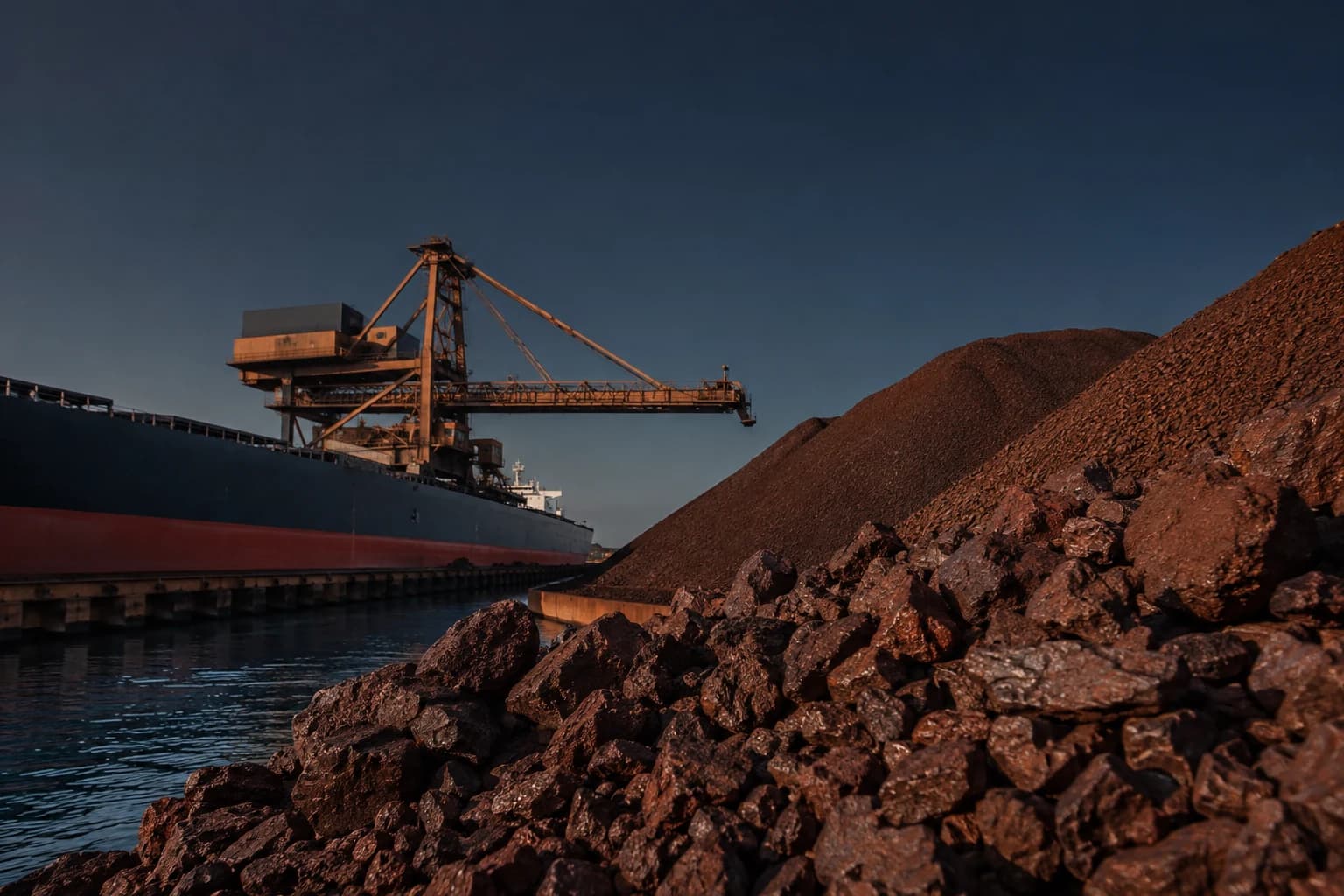
Where iron begins.
Iron-bearing raw material for primary production.
The mineral feedstock.
Form and required composition are confirmed against your brief.
Into iron and steel.
Specify the production route and receiving destination.
Beyond
the form.
- Material
- Iron-bearing mineral feedstock
- Used for
- Iron and steel production
01What Is Iron Ore?
Iron ore is a naturally occurring mineral from which metallic iron (Fe) can be economically extracted. It typically contains varying quantities of iron oxides, such as hematite (Fe₂O₃) and magnetite (Fe₃O₄). Through smelting and refining processes in blast furnaces or direct reduction, iron ore is transformed into steel or other iron-based materials.
02Key Characteristics
High Iron Content: Quality iron ore typically contains between 58% and 67% Fe, depending on the grade and source.
Forms & Variants: Common ore forms include lumps, fines, and pellets, each suitable for specific furnace or reduction techniques.
Industry-Compliant Standards: Iron ore must meet stringent chemical composition and physical properties for optimal steelmaking performance.
03Applications of Iron Ore
Steel Production
Blast Furnaces: Mixed with coke and limestone to produce molten iron.
Direct Reduction: Processed into sponge iron for electric arc furnaces and other specialized steelmaking methods.
Construction & Infrastructure
Structural Steel: Used in beams, bars, and reinforcements for building bridges, skyscrapers, and infrastructure projects.
Machinery & Equipment: Essential in manufacturing robust machine parts and heavy industrial equipment.
Automotive & Transportation
Vehicles: High-strength steel derived from iron ore is vital for car frames, rail tracks, and other transportation systems.
Metal Castings & Foundries
Component Manufacturing: Foundries rely on quality iron for casting engines, pipes, and a variety of mechanical components.
04Benefits of High-Quality Iron Ore
Consistent Metallurgical Properties Minimal impurities and uniform particle size distribution translate to stable furnace conditions and predictable steel properties.
Improved Production Efficiency High-grade iron ore reduces slag formation, optimizes energy consumption, and accelerates throughput in both blast furnaces and direct reduction processes.
Enhanced Steel Performance Superior ore grades result in steel with better tensile strength, ductility, and corrosion resistance.
Build a clear requirement.
Four decisions give our team enough context to qualify your Iron Ore enquiry. Final specifications and supply terms are confirmed with the quotation.
- Composition requirements
- Required iron-ore quality and composition criteria.
- Material form
- Required supplied form and downstream process.
- Quantity & packaging
- Order quantity, preferred unit and packaging requirements.
- Destination & timing
- Delivery location, preferred shipment terms and required date.
Technical documents
Documents are supplied on request for the quoted grade. Ask our team to confirm the specification sheet and applicable quality or safety documentation.
REQUEST DOCUMENTS